
Insights of Real Estate Business in Sri Lanka

The real estate market in Sri Lanka is currently navigating a transitional phase, shaped by economic shifts, changing consumer preferences, and new infrastructure. Here are the key insights into the market as of 2026:

Key Market Drivers
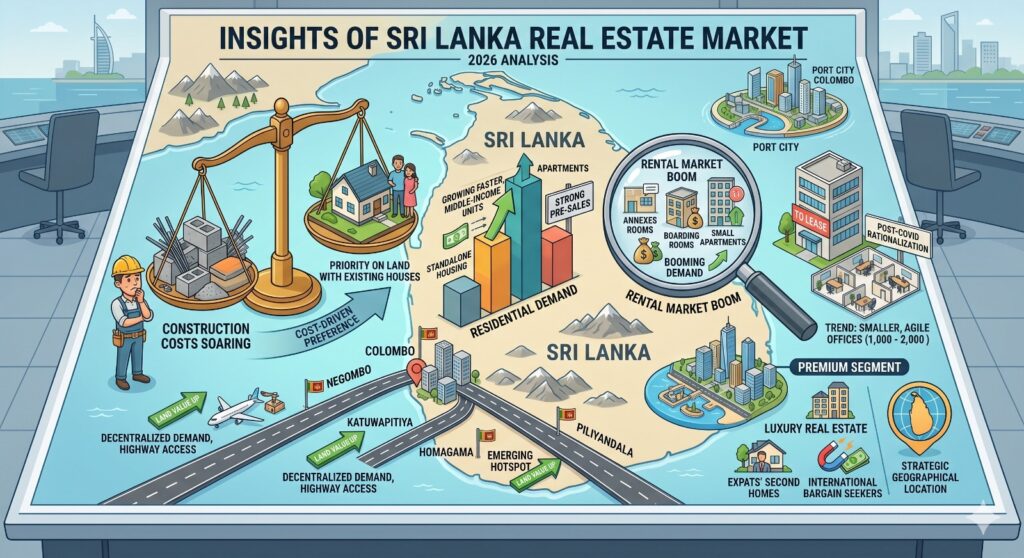
  • Economic Pressures: Currency depreciation and soaring construction costs are significant factors driving up property prices. Because building from scratch has become highly expensive, there is a growing trend of buyers prioritizing lands that already have existing houses on them.
  •  
  • Strategic Positioning: Sri Lanka’s geographical location—bridging the Middle East, South Asia, and Southeast Asia—continues to bolster its appeal in the luxury real estate sector. Mega-projects like Port City Colombo are positioning the country for long-term growth in the premium segment, drawing attention from expats looking for second homes and international investors seeking bargains.

Sector-Specific Trends

  • Residential Shifts: Demand for apartments and condominiums is currently growing at a faster pace than traditional standalone housing. Developers who have pivoted to offer more affordable, middle-income units are seeing their products sell at a much faster rate, with strong pre-sale numbers.
  • Commercial Real Estate: Post-COVID work trends and economic rationalization have altered commercial space requirements. Businesses are downsizing their physical footprints, shifting demand toward smaller, more agile office spaces—typically in the 1,000 to 2,000 sq ft range.
  •  
  • Rental Market Boom: With the cost of homeownership rising, the rental market is experiencing a boom. Rental yields and occupancy rates are climbing across Colombo, creating fierce demand for annexes, boarding rooms, and smaller apartments.

Emerging Hotspots

While central Colombo remains the premium hub, expressway expansions are decentralizing demand and driving up land values in the suburbs. Emerging investment hotspots include:

  • Negombo and Katuwapitiya (benefiting from airport proximity and highway access)
  • Homagama
  • Piliyandala
  •  

These areas offer more affordable entry points for first-time buyers and investors while maintaining strong connectivity to the commercial capital.

Real Estate Investment in Sri Lanka: 2026 Outlook

As of 2026, Sri Lanka’s real estate landscape is navigating a phase of selective recovery and strategic opportunity. Supported by a stabilizing economic environment with policy interest rates holding around 7.75%, the property market is rebounding and drawing renewed confidence from both domestic and overseas investors.

Here is a breakdown of the investment landscape, focusing on yields, emerging zones, and market strategy.
Return on Investment (ROI) & Yields

Your expected returns will vary significantly based on the asset class you choose:

  • Raw Land: Land investments currently offer the highest capital appreciation, with prime areas seeing growth between 20% and 30%.
  •  
  • Apartments & Condos: The residential apartment segment is stabilizing, offering moderate capital appreciation of approximately 8% to 13%. For landlords in Colombo, typical annual rental yields for these apartments sit at around 3% to 4%.
  •  
  • Short-Term Rentals: The tourism and short-term stay market is lucrative for optimized properties. Best-in-class listings that utilize dynamic pricing routinely achieve occupancy rates above 75%.

The Rise of Suburban “Growth Corridors”

While prestige plots in central Colombo (Colombo 1-15) remain highly sought after, their land price growth has been relatively modest at around 7% year-over-year. The most compelling investment returns in 2026 are shifting toward value zones and growth corridors.

  • Suburban zones in the Western Province’s outer areas have seen average land prices jump by up to 20%.
  • Areas boasting upcoming infrastructure, transport links, and expressway access—such as Homagama, Piliyandala, Athurugiriya, and the Gampaha fringe—are expected to outpace central zones in relative appreciation.
  •  

Luxury Developments & Foreign Interest

Sri Lanka is actively emerging as a luxury real estate destination. Over 8,000 new residential apartment units are slated for completion by 2026, bringing the national pipeline of recognized units to over 42,000.

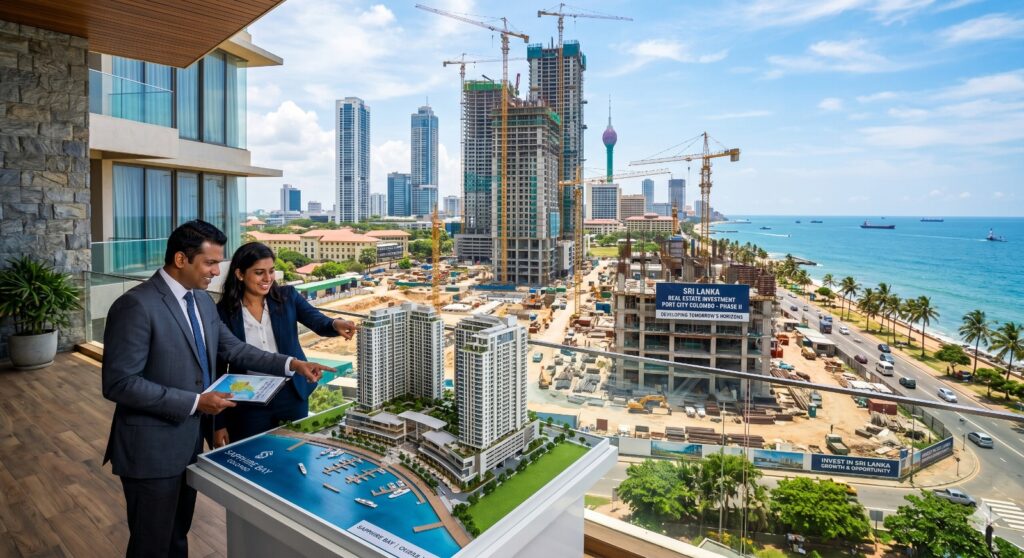
  • Mega-developments like Port City Colombo are positioned as strong future growth areas catering to the luxury and lifestyle-led demographic.
  • There is significant interest from the Sri Lankan diaspora and foreign investors, who now account for roughly 27.7% of search traffic in specific real estate segments. For these buyers, property serves as a tangible asset hedge against inflation.
  •  

Investment Strategy for 2026

Due to heavy taxes on construction materials and the fact that Sri Lanka has some of the highest construction costs in South Asia, quick, speculative “flips” carry heightened risk. Market analysts recommend a disciplined, long-term mindset; investors who plan for a 5-to-10-year hold and prioritize developments with clear titles and transparent governance are best positioned to win.

The Future of Real Estate Business in Sri Lanka

According to recent market data and industry analyses, the future of the real estate business in Sri Lanka, looking ahead from 2026, is defined by strategic shifts, evolving consumer preferences, and targeted investment opportunities.


Key Trends Shaping the Future
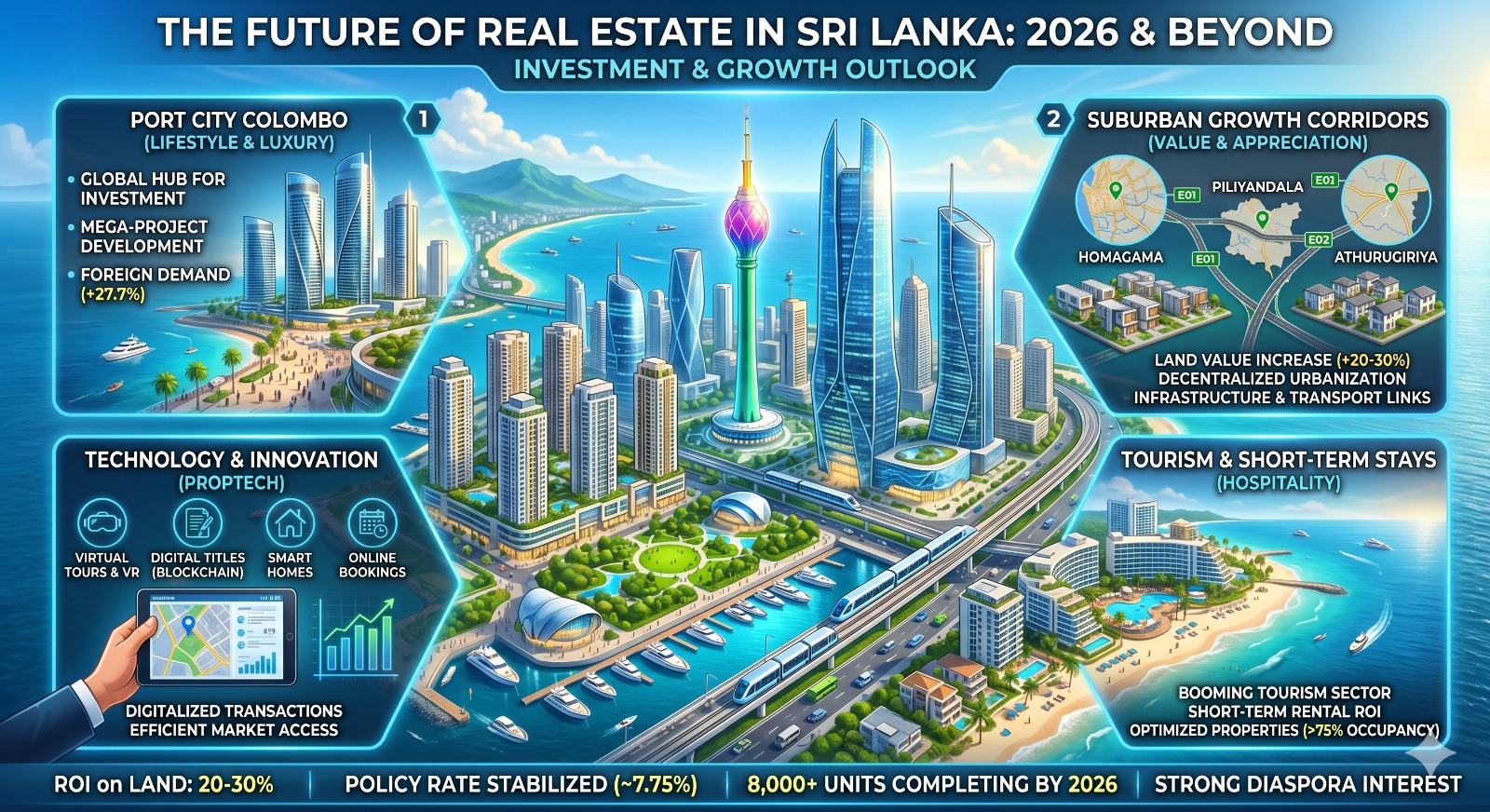
  • Rise of the “Growth Corridors”: Prime investment returns in the coming years are predicted to come from developing suburban areas rather than purely central, high-cost plots. These growth corridors are characterized by good infrastructure, transportation access, and upcoming developments. Consequently, there is strong demand for suburban land in these areas.
  • Growing Overseas and Diaspora Interest: The market is proving highly attractive to expatriates and foreigners, driven by rising tourism, the country’s strategic location, and demand for luxury homes. Recent industry events, such as the Lanka Property Show 2026, demonstrated a higher demand from overseas visitors, signaling that the country is increasingly viewed as a safe destination for investments. The participation of the Sri Lankan diaspora in the real estate market is also actively rising.
  •  
  • Evolving Residential Demands: The future points toward a rise in vertical living for the modern family and an increased focus on wellness-first luxury condominiums. Furthermore, there is strong projected demand for lifestyle, semi-luxury, and mixed-use developments.
  •  
  • Rental-Focused Investment Strategies: Due to high construction costs and evolving housing affordability, there is an increasing trend toward rental-focused investment strategies. The active short-term rental market shows that top-tier properties can frequently achieve occupancy rates over 75% by employing dynamic pricing and focusing on superior guest experiences. Investing in apartments for regular rental income and targeting coastal areas for tourism-driven returns remain key forward-looking strategies.
  •  
  • Financial Shifts: Investors are increasingly moving their capital from fixed deposits into real estate to secure tangible assets. This overall growth is occurring against a backdrop of cautious lending and financing conditions, which is contributing to a more stable but moderate price growth environment.
  •  
  • Impact of Mega-Projects: Large-scale initiatives like the Port City are expected to act as a significant “catalyst” for future real estate investment, drawing global attention and setting new standards for development in the country.

Reset password

Enter your email address and we will send you a link to change your password.

Get started with your account

to save your favourite homes and more

Sign up with email

Get started with your account

to save your favourite homes and more

By clicking the «SIGN UP» button you agree to the Terms of Use and Privacy Policy
Powered by Estatik